
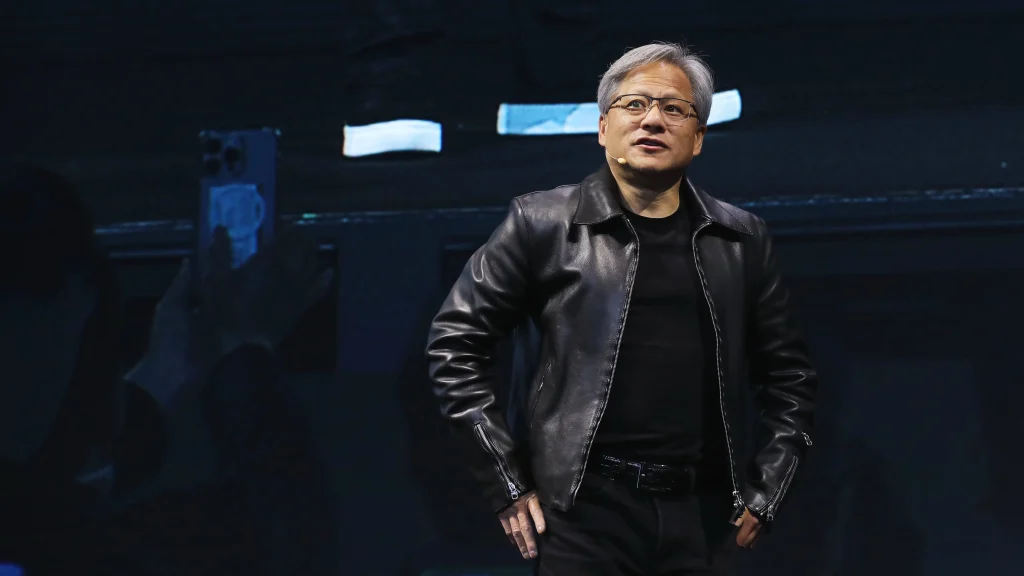
NVIDIA CEO Jensen Huang has once again put the spotlight on the future of artificial intelligence. Speaking at the annual CES technology conference in Las Vegas, Huang introduced Alpamayo, a new AI platform designed to help autonomous vehicles reason, explain decisions, and handle rare real-world driving scenarios—much like humans do.
According to Huang, Alpamayo goes beyond traditional self-driving systems.
“Alpamayo brings reasoning to autonomous vehicles, allowing them to think through rare scenarios, drive safely in complex environments, and explain their driving decisions,” he said during his keynote.
From Chips to Full AI Platforms
The announcement signals a deeper shift in NVIDIA’s strategy—from being primarily a chipmaker to becoming a full-scale AI platform provider for physical systems like cars and robots.
Industry analysts believe this move strengthens NVIDIA’s leadership in the AI space.
Paolo Pescatore of PP Foresight noted that NVIDIA’s focus on AI systems at scale puts it well ahead of competitors, calling Alpamayo “a profound shift toward physical AI ecosystems.”
Mercedes-Benz CLA: NVIDIA’s First Driverless Production Car
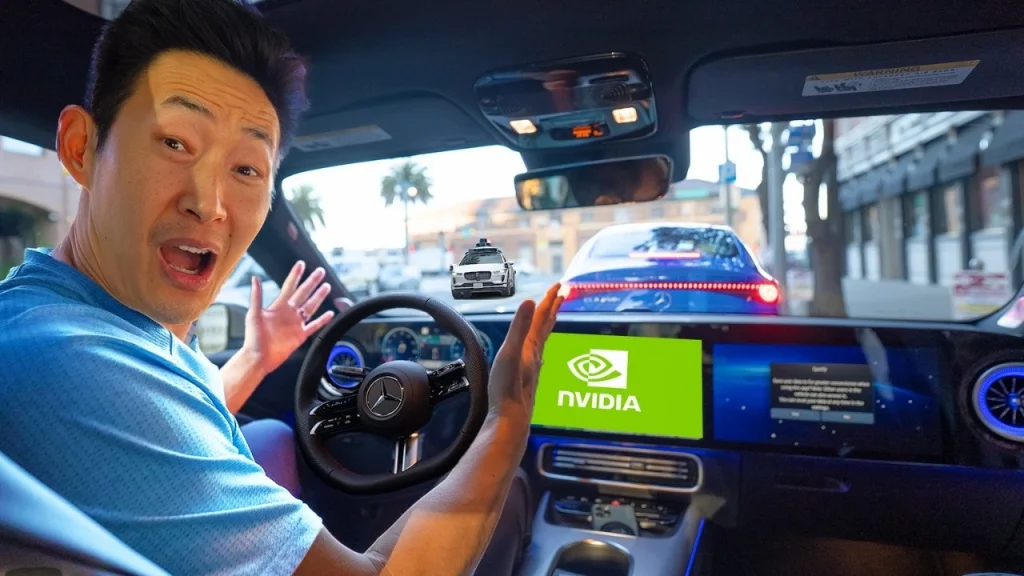
Alongside Alpamayo, Huang revealed that NVIDIA has already begun producing a driverless car in partnership with Mercedes-Benz—the autonomous Mercedes-Benz CLA.
The vehicle is expected to launch in the United States within the next few months, followed by rollouts in Europe and Asia.
During the presentation, NVIDIA showcased a video of the AI-powered CLA smoothly navigating the streets of San Francisco, while a passenger sat calmly behind the wheel with hands resting in their lap.
Huang explained that the system feels natural because it was trained directly on human driving behavior, while still being able to explain every action it plans to take.
Open-Source AI for Autonomous Driving
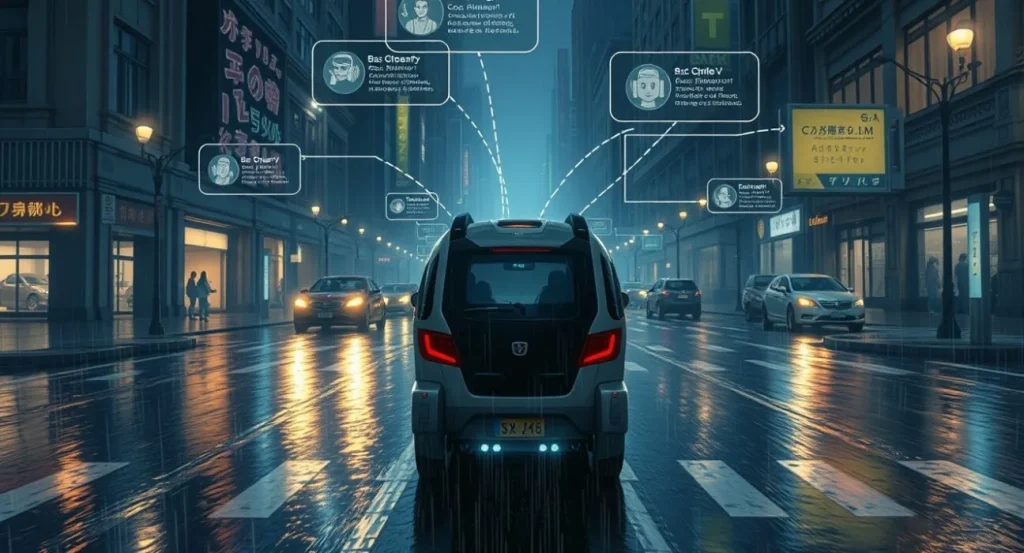
In a notable move, NVIDIA announced that Alpamayo is open-source. The model’s code is now available on Hugging Face, allowing autonomous vehicle researchers and developers to access, retrain, and improve it for free.
“Our vision is that someday, every single car and every single truck will be autonomous,” Huang told the audience.
A Challenge to Tesla?
The announcement naturally drew comparisons to Tesla’s Autopilot and Full Self-Driving systems. Elon Musk responded on social media, saying NVIDIA’s approach mirrors Tesla’s own efforts—but warned that solving the final edge cases in autonomous driving remains extremely difficult.
Like Tesla, NVIDIA has also confirmed plans to launch a robotaxi service by next year, though it has not yet revealed its partner or the location of the rollout.
Market Reaction and What’s Next
Following Huang’s presentation, NVIDIA shares saw a slight rise in after-hours trading, signaling investor confidence.
The company also confirmed that its next-generation Rubin AI chips are already in production and scheduled for release later this year. These chips are designed to deliver higher performance while consuming less energy, potentially lowering the overall cost of AI development.
Despite recent concerns about whether AI demand is overhyped, NVIDIA remains the world’s most valuable publicly traded company, with a market capitalization exceeding $4.5 trillion.