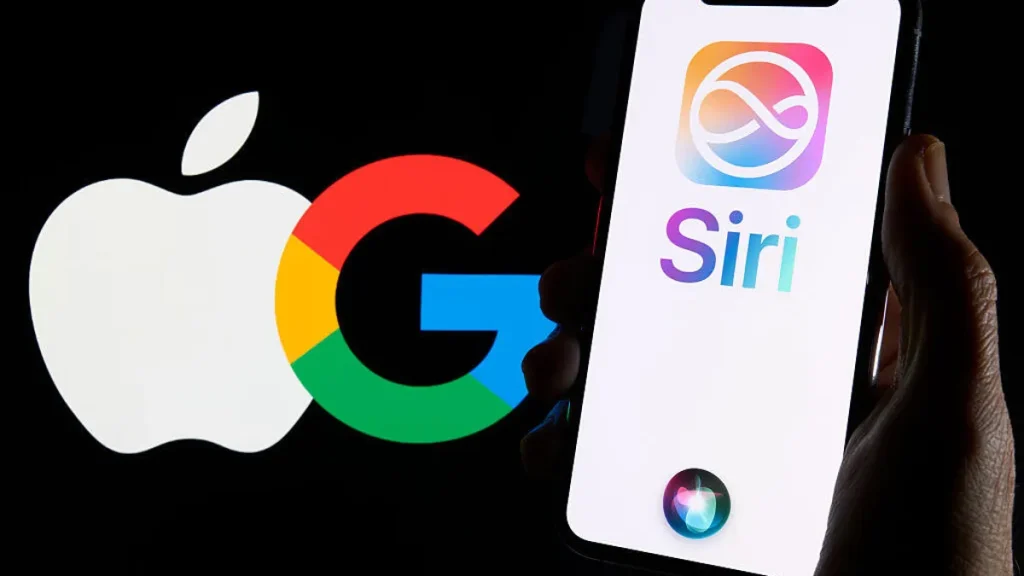
Apple has officially chosen Google’s Gemini AI to power the next generation of Siri, marking one of the most significant shifts in Apple’s artificial intelligence strategy in over a decade. The AI-powered Siri experience is expected to roll out later this year, fundamentally changing how users interact with their iPhones, iPads, and Macs.
This move signals a clear message: Apple is prioritizing best-in-class AI performance over building everything entirely in-house—at least for now.
What Exactly Did Apple Announce?
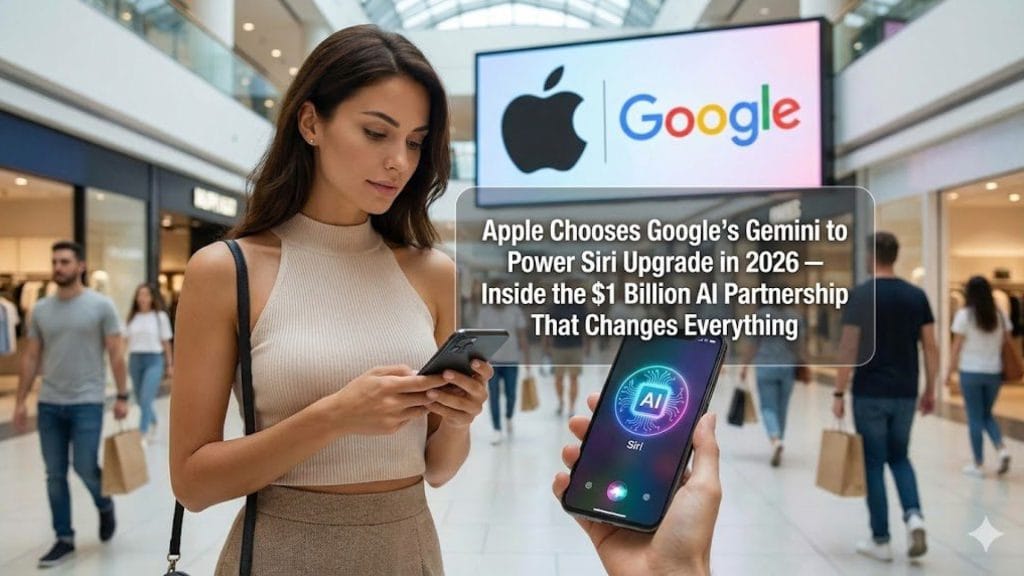
According to reports, Apple has selected Google’s Gemini large language model (LLM) to handle advanced generative AI capabilities inside Siri.
While Apple will continue running Siri’s core functions on its own infrastructure, complex AI tasks—such as long-form reasoning, contextual conversations, and advanced content generation—will be powered by Gemini.
In simple terms:
- Apple controls the experience and privacy
- Google provides the AI intelligence layer
Why Apple Chose Google Gemini Over Building Its Own AI
Apple has been investing heavily in AI research, but large language models require massive data, compute, and iteration speed—areas where Google currently has a significant advantage.
Key reasons behind Apple’s decision include:
1. Proven AI Scale and Performance
Gemini is already battle-tested across Google products like Search, Workspace, and Android. Apple gains instant access to a mature AI system without years of delay.
2. Faster Time-to-Market
Building a competitive LLM from scratch could take years. Partnering with Google allows Apple to ship AI-powered Siri now, not later.
3. Privacy-First Implementation
Apple will reportedly route requests selectively, ensuring sensitive queries remain on-device or within Apple’s private cloud before interacting with Gemini.
How AI-Powered Siri Will Change User Experience
The upgraded Siri will move far beyond simple commands and scripted responses.
Expected improvements include:
- Context-aware conversations (Siri remembers what you asked earlier)
- Smarter app actions across Messages, Mail, Calendar, and Notes
- Natural language commands instead of rigid phrasing
- On-device + cloud hybrid AI processing
This positions Siri closer to conversational AI assistants users already experience with tools like ChatGPT and Gemini—but within Apple’s tightly controlled ecosystem.
What This Means for Apple’s AI Strategy
This partnership highlights a major philosophical shift in Apple’s AI approach.
For years, Apple emphasized:
- In-house development
- Privacy over capability
- Incremental AI improvements
Now, Apple is clearly embracing a “best tool for the job” strategy, even if that tool comes from a long-time competitor.
Importantly, this does not mean Apple is abandoning its own AI efforts. Instead:
- Gemini handles advanced language intelligence
- Apple focuses on UX, hardware optimization, and privacy enforcement
Impact on Google and the Broader AI Landscape
For Google, this deal is a massive validation of Gemini as an enterprise-grade AI platform.
Key implications:
- Gemini gains access to hundreds of millions of Apple users
- Google strengthens its position against OpenAI and Microsoft
- AI competition shifts from standalone chatbots to embedded assistants
This partnership also blurs traditional rivalry lines—Apple and Google are now competitors and collaborators in the AI era.
Will Siri Replace ChatGPT on iPhones?
Not entirely.
Apple is expected to offer multiple AI options, allowing users to choose:
- Siri with Gemini for system-level tasks
- Third-party AI tools for specialized use cases
Rather than locking users into a single AI, Apple appears to be building an AI orchestration layer—a strategic move that keeps Apple in control while remaining flexible.
Final Thoughts: A Defining Moment for Apple AI
Apple choosing Google’s Gemini to power Siri is more than a technical upgrade—it’s a strategic acknowledgment that AI leadership now defines platform leadership.
By combining:
- Apple’s hardware and privacy ecosystem
- Google’s AI intelligence and scale
Apple is positioning Siri to remain relevant in a world increasingly dominated by conversational and generative AI.
The success of this move will ultimately depend on execution—but one thing is clear: Siri is about to get a lot smarter.